
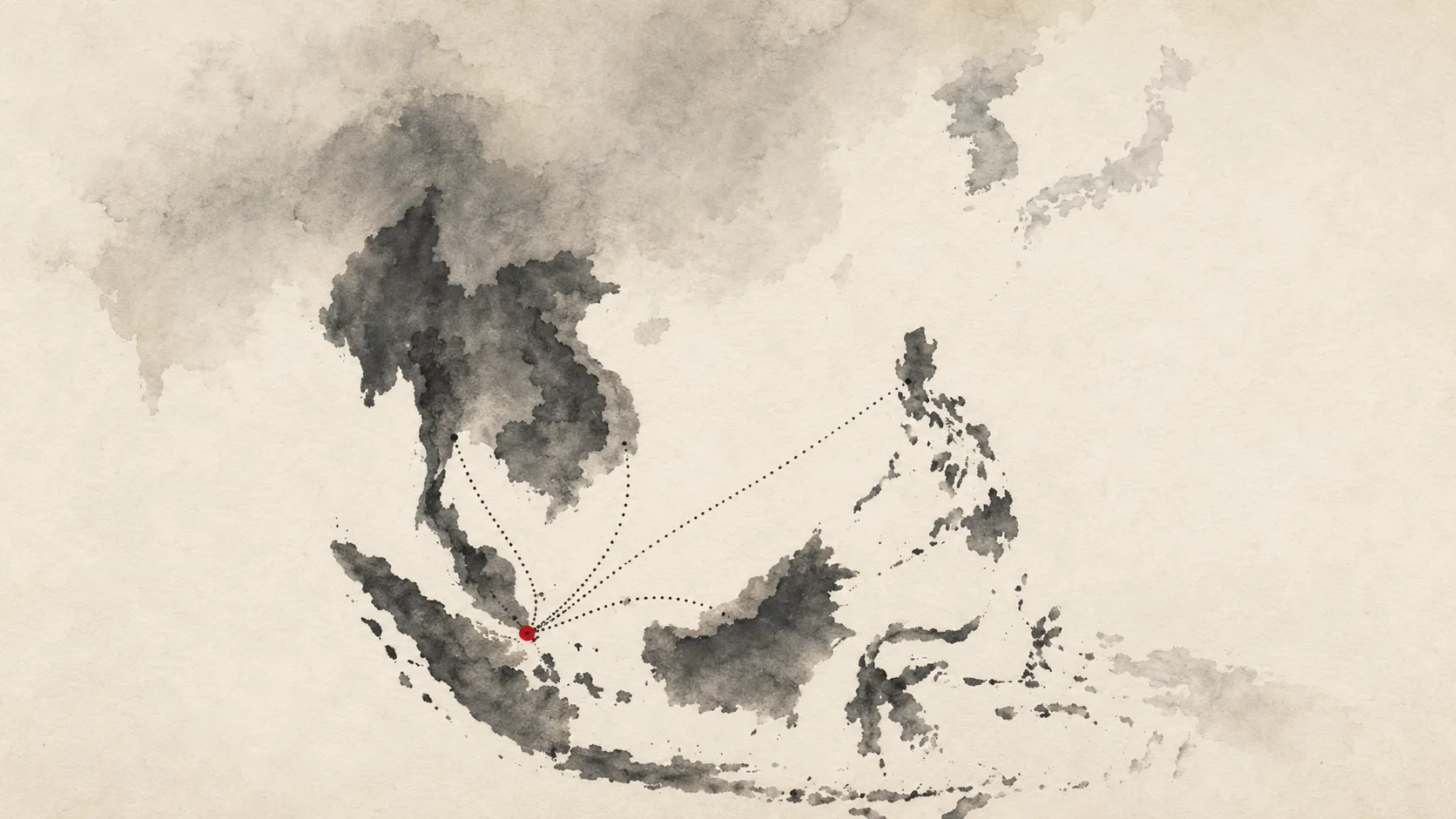
The brands that scale efficiently across ASEAN share a structural pattern: they treat Singapore as a hub — the legal, logistical, and commercial centre of gravity — and expand spoke by spoke into Malaysia, Thailand, Vietnam, and Korea. This is not an accident of geography. Singapore's regulatory clarity, English-language business infrastructure, GST efficiency, and position as ASEAN's primary air and sea freight hub make it the operationally superior anchor for regional expansion. The hub-and-spoke model, implemented through TNGAP's IOR infrastructure, allows Japanese brands to add markets incrementally — without rebuilding operational infrastructure for each new country.
Singapore Hub: The Legal and Operational Anchor
The Singapore hub is not simply a convenient starting point — it is the legal and financial centre of the entire regional operation. TNGAP's Singapore Pte. Ltd. entity holds: the IOR registrations for Singapore customs declarations, the GST registration covering all Singapore transactions, the marketplace seller-of-record accounts on Shopee SG, Lazada SG, and TikTok Shop SG, the Singapore warehouse and cold chain storage, the compliance relationship with Christopher & Lee Ong for legal review, and the consolidated banking relationship for regional collections and remittances. For Japanese brands, the Singapore hub means a single point of financial reporting, a single compliance relationship, and a single operational counterpart — TNGAP — regardless of how many ASEAN markets are active simultaneously. The hub structure eliminates the most common scaling failure: the proliferation of fragmented local relationships in each market, each with different contract terms, different compliance requirements, and different reporting formats.
Malaysia Spoke: Second Priority, Fastest Time to Revenue
Malaysia is the natural first spoke addition from Singapore. Geographic proximity (3.5 hours by road from the Johor-Singapore Causeway), cultural overlap in Chinese-majority consumer segments, and the Shopee and Lazada platform overlap with Singapore operations mean that adding Malaysia adds incremental compliance complexity rather than wholesale new infrastructure. TNGAP manages Malaysia operations through a combination of its own SST-registered IOR structure and established Malaysian logistics partners. Incremental cost to add Malaysia to an active Singapore IOR engagement: SGD 600–900 per month in additional compliance overhead. Marketplace accounts: Shopee MY and Lazada MY can be activated within 3–5 weeks of the decision. Malaysian consumer segments most receptive to Japanese brands: Chinese-Malaysian consumers (24% of population) show purchasing behaviour closely aligned with Singaporean Chinese consumers. Malay-majority segments prioritise Halal certification — Japanese food and supplement brands must obtain JAKIM Halal certification (or equivalent) before selling into Malay-majority consumer channels. TNGAP coordinates JAKIM Halal certification as part of the Malaysia spoke onboarding process.
Thailand Spoke: High Growth, High Content Requirements
Thailand is the highest-growth spoke in the TNGAP portfolio for Japanese beauty and lifestyle brands. Bangkok's TikTok Shop Live Commerce ecosystem is the most developed in ASEAN — brands that invest in Bangkok-based creator partnerships see customer acquisition costs 30–40% below equivalent Lazada TH performance marketing spend. The Thailand spoke requires a locally licensed customs broker (TNGAP relationship) and a Thailand-based logistics partner for last-mile fulfilment beyond Bangkok. No Thai entity is required for Japanese brands operating under TNGAP's Pro-tier re-export structure. Incremental cost to add Thailand: SGD 900–1,400 per month in additional compliance and logistics coordination. Thai consumer preference note: Japanese origin labelling is a significant positive signal in Thai beauty, food, and health categories. TNGAP recommends maintaining Japanese-language packaging with Thai supplement labelling in a secondary position — the reverse of what brands often assume the market requires.
Vietnam Spoke: Highest Growth Rate, Longest Lead Time
Vietnam is the fastest-growing ASEAN e-commerce market by GMV percentage growth (estimated +28% YoY for 2026), but it carries the longest regulatory lead time. The 45–50 business day trading licence process means brands that decide to add Vietnam in Month 3 of Singapore operations will not see their first Vietnam revenue until Month 6 at the earliest. TNGAP initiates Vietnam trading licence preparation concurrently with Singapore launch — the licence application is filed in Month 1, and the licence is received in Month 3 ready for Month 4 marketplace activation. For brands that do not pre-plan this timeline, Vietnam becomes a Month 9–12 addition instead of Month 6. Japanese brand affinity in Vietnam is concentrated in beauty, electronics, and food categories. TikTok Shop VN and Shopee VN are the primary channels; Lazada VN holds a smaller market position relative to the other ASEAN markets. Vietnam's median e-commerce order value is lower than Singapore and Malaysia — brands should model Vietnamese revenue at a lower average basket and higher volume, rather than expecting Singapore-equivalent transaction values.
Korea Spoke: Specialist Channel, Strong Japanese Brand Affinity
Korea is unique in the TNGAP hub-and-spoke model: it is not geographically ASEAN, but Japanese brands with regional expansion ambitions consistently identify Qoo10 KR as a high-potential channel due to Korean consumers' strong and well-documented affinity for Japanese goods. TNGAP manages Korea channel accounts on Qoo10 KR as part of the Pro-tier regional scope. Korea requires a separate IOR structure (Korean customs registration) and KRW-denominated pricing — it cannot be serviced under the Singapore hub legal entity. However, TNGAP's operational and reporting layer integrates Korean channel data into the same consolidated dashboard as Singapore, Malaysia, Thailand, and Vietnam — giving Japanese brands a unified regional view. The hub-and-spoke model is not a fixed structure — it is a sequenced expansion playbook. Start with Singapore. Add Malaysia in Month 2–3. Pre-file Vietnam in Month 1 for Month 4 activation. Add Thailand by Month 6. Evaluate Korea at Month 9 based on regional brand momentum. Each spoke adds incremental revenue with sub-linear incremental overhead — because the Singapore hub absorbs the fixed compliance, logistics, and reporting infrastructure that each spoke would otherwise require independently.
Hub-and-Spoke Success Metrics and KPIs
A hub-and-spoke expansion is not measured by market count alone. TNGAP tracks five operational KPIs that determine whether the model is delivering its structural advantages — or replicating the fragmentation it was designed to eliminate.
Market Entry Speed
Time from signed TNGAP contract to first saleable SKU listed on a marketplace in the target spoke market. Target: Singapore in 3 weeks; Malaysia in 5 weeks from Singapore launch; Thailand and Vietnam in 8–10 weeks from first spoke activation. Brands that exceed 12 weeks to first listing have typically delayed product localisation (Thai labelling, Halal certification) rather than infrastructure.
Total Cost of Operations (TCO) Ratio
TNGAP compliance and operational fees as a percentage of gross merchandise value (GMV) generated across all active spoke markets. Target ratio: below 8% at Standard tier, below 5% at Pro tier once volume exceeds SGD 500K monthly GMV. The hub structure achieves this ratio by spreading fixed Singapore infrastructure costs across multiple markets — the ratio falls as spoke count and volume grow.
Country Onboarding Time
Time to add a fully operational spoke (marketplace accounts live, customs IOR registered, logistics partner contracted) after the decision to expand. Target: Malaysia 3 weeks, Thailand 5 weeks, Vietnam 8 weeks (including trading licence). Brands pre-filing Vietnam in Month 1 achieve the 8-week target; brands filing in Month 3 face 12-week delays.
Compliance Overhead per Market
Monthly time and cost spent on compliance activities (GST returns, customs filings, marketplace policy monitoring) per active spoke market. Under the hub model, Singapore compliance overhead is fixed; each additional spoke adds incremental compliance cost of SGD 400–800 per month rather than full standalone compliance infrastructure. Brands operating 4 spokes through TNGAP typically incur 60% less aggregate compliance overhead than equivalent direct-entry models.
Tax Efficiency Score
Effective tax rate on cross-border ASEAN trade compared to the theoretical maximum rate (applying all countries' import duties and consumption taxes at standard rates). TNGAP-managed hub-and-spoke operations consistently achieve effective rates 40–55% below the theoretical maximum through Singapore's FTA network, B2B GST pass-through, and zero-rated export structuring. This metric is reviewed quarterly in the compliance report issued to all Standard and Pro tier clients.
Market data and expansion timelines reflect TNGAP operational experience as of June 2026. Regulatory timelines are subject to change.
Ready to map your ASEAN hub-and-spoke expansion plan? TNGAP will design the market sequence in 30 minutes.
Frequently Asked Questions
Why is Singapore the right hub for ASEAN expansion rather than Malaysia or Thailand?
Singapore is ASEAN's primary IOR hub for three structural reasons: (1) English-language business infrastructure and common law legal system reduce transaction costs for Japanese companies; (2) Singapore's GST framework is transparent and well-documented, with no currency risk (SGD is stable against JPY); (3) Singapore's position as ASEAN's primary air and sea freight gateway gives it the best logistics infrastructure for regional distribution. Malaysia and Thailand are operationally viable hubs for specific categories (Malaysia for Halal-certified products; Thailand for beauty brands with heavy TikTok Shop Live Commerce requirements), but Singapore's regulatory clarity makes it the lowest-risk starting point for first-time ASEAN entrants.
Can a Japanese brand skip Singapore and launch directly in Vietnam or Thailand?
Yes, but TNGAP does not recommend it. Direct-to-Vietnam launch requires a trading licence (45–50 business days), a Vietnam-based customs broker, and a VND-denominated banking arrangement — significant infrastructure for an unproven market. Direct-to-Thailand launch requires a Thai-licensed customs broker, Thai-language content, and a Bangkok-based logistics partner. Both are achievable, but the risk-adjusted timeline is 2–3 months longer than Singapore-first. The Singapore hub's regulatory certainty and ASEAN FTA preferential duty rates make it the economically superior starting point in virtually all category analyses.
How does the hub-and-spoke model handle inventory across multiple countries?
TNGAP's Singapore warehouse serves as the regional inventory hub. For Singapore-market sales, goods are stored and fulfilled from Singapore. For Malaysia and Thailand spokes, TNGAP uses a re-export structure: goods are shipped from Japan to Singapore in bulk (benefiting from consolidated freight rates), then re-exported in smaller quantities to Malaysia and Thailand as orders are confirmed. For Vietnam, direct air freight from Japan is typically more cost-effective than Singapore re-export due to Vietnam's customs import procedures. TNGAP's Pro-tier clients receive a monthly inventory allocation recommendation that optimises stock positioning across all active spoke markets based on sell-through velocity.
Explore TNGAP Service Tiers
The hub-and-spoke expansion model is the operational foundation of TNGAP's Standard and Pro service tiers, with Singapore as the legal hub, spoke market IOR registrations included, and a consolidated reporting layer across all active markets.
View service tiers →See all 5 ASEAN market analyses →
Markets Overview →